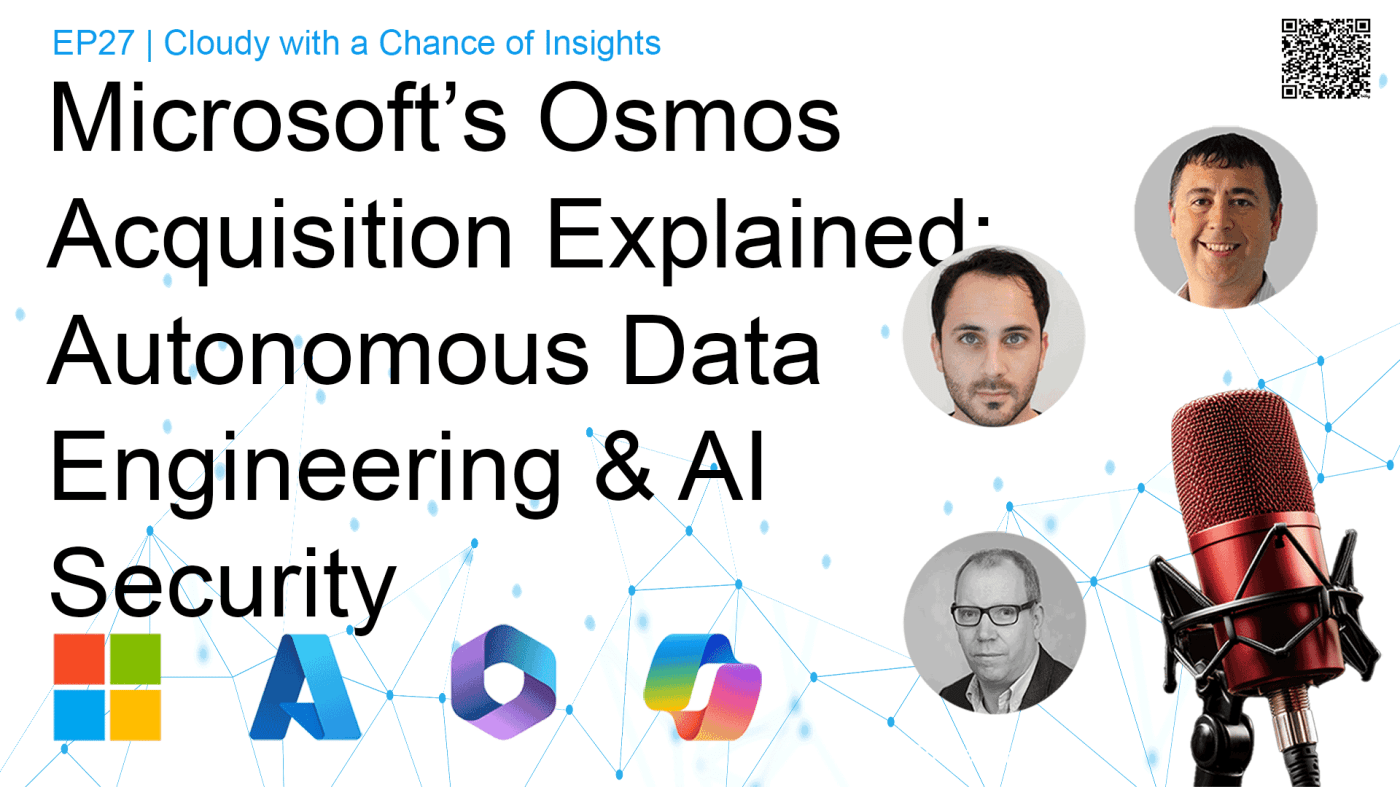
Welcome to 2026! As we usher in a new year, the ‘Cloudy with a Chance of Insights’ team delves into the ripple effects of Microsoft’s recent acquisition of Osmos. In Episode 27, hosts Richard Hogan, David Rowley, and Cyrus Irandoust unpack what this move means for autonomous data engineering, AI-driven cloud security, and the skillsets every tech leader needs to cultivate for the decade ahead.
This episode is particularly relevant for cloud architects, data engineers, IT leaders, and all those keen to stay at the forefront of AI-driven enterprise technology and Microsoft cloud innovations. If you’re curious about the trends shaping 2030’s tech landscape, read on for a comprehensive breakdown, key host insights, and actionable takeaways.
The Osmos Acquisition: Far More Than a Routine Press Release
David Rowley kicks off the episode with a clear message: Microsoft’s acquisition of Osmos is not just another entry in the corporate news cycle. As he puts it, “The more I think about it, it says something quite important about where I think platforms and, I guess, work in general are going.”
What is Osmos, and Why Does It Matter?
Osmos is a platform specialising in autonomous data ingestion, transformation, and adaptation. In plain terms, it helps organisations tackle the messy, repetitive ‘first mile’ of data work—often the slowest part of any data or AI initiative. Osmos’s tech automates the structuring and cleaning of data, dynamically adapting to schema changes and new data sources.
By integrating Osmos into the Microsoft Fabric ecosystem, Microsoft is aiming to:
- Streamline data ingestion from disparate sources
- Reduce headaches from schema drift (a notorious challenge in modern data engineering)
- Accelerate AI readiness without sacrificing data quality or governance
David highlights a crucial point: “Data engineering is still where progress, I guess, slows down when you’re trying to do these AI things. The ingestion of that data piece is always the slower element.” Osmos is poised to make that bottleneck a thing of the past.
The ‘First Mile’ Problem—and Why It’s So Hard
Data engineers have long struggled with integrating, cleaning, and transforming data from a variety of formats and sources. Manual data onboarding, schema mapping, and validation slow down AI projects and increase error rates. Osmos’s approach is to ‘autonomously’ handle these tasks, freeing human engineers to focus on higher-value work.
As Richard Hogan notes, “Osmos could revolutionise how organisations manage the ‘first mile’ of messy, repetitive data work, freeing up human engineers for more impactful tasks.”
Autonomous Data Engineering and the Human Factor
One of the most insightful threads in this episode is the exploration of what it means for AI to take on more of the data engineering ‘grunt work’. The hosts are clear: this is not about replacing humans, but about elevating their role.
Not Replacing, but Elevating
David makes a compelling argument: “The headline itself isn’t the interesting thing. I think what’s interesting is what they’re trying to attack, trying to make it go away.” What’s ‘going away’ is not the job of the data engineer, but the drudgery that holds back innovation and job satisfaction.
By automating the repetitive and error-prone aspects of data engineering, solutions like Osmos empower engineers to contribute more strategically—designing data architectures, ensuring quality, and collaborating cross-functionally.
The Challenge of Trust and Oversight
Of course, as more autonomy is handed to AI systems, questions arise about oversight, risk, and responsibility. How do we ensure that automated data pipelines are robust, ethical, and compliant?
Design Responsibility: “At What Cost?”
Inspired by a thought-provoking LinkedIn article from Ida Person, the team discusses a crucial mindset shift: considering the broader consequences of autonomous systems.
Richard reflects, “We need to be asking: at what cost are we automating these processes? Are we introducing new risks, dependencies, or blind spots?”
This theme resonates throughout modern cloud engineering:
- Automation can introduce hidden risks around governance, traceability, and compliance
- Designers and architects must weigh trade-offs between speed, cost, and control
- Ongoing human oversight remains essential, especially as AI systems increasingly make autonomous decisions
The episode encourages leaders and engineers alike to champion ‘design responsibility’—making intentional choices about when and how to delegate tasks to AI, and ensuring that human expertise remains central.
Microsoft Intune, Purview, and the Skills for 2030
Cyrus Irandoust rounds out the discussion with timely updates on Microsoft Intune (endpoint management) and Purview (data governance and compliance). These platforms are evolving rapidly to meet the needs of autonomous, AI-driven cloud environments.
Security and Compliance in the Age of AI
As AI systems take on more responsibilities, robust security and compliance frameworks become non-negotiable. Cyrus shares his perspective: “The line between data engineering, security, and compliance is blurring. Skills that were once siloed are fast becoming table stakes for everyone in cloud.”
Key developments highlighted in the episode:
- Microsoft Intune is adding deeper integration with AI-based identity and access management tools, making it easier to secure diverse endpoints—especially in hybrid and remote work environments.
- Microsoft Purview offers enhanced data lineage and compliance reporting, giving organisations greater visibility into how data flows and is transformed, even in highly automated pipelines.
Core Skills for the Next Decade
Looking ahead to 2030, the team draws inspiration from a recent article by Fabio Woolly on future skillsets. The consensus: technical excellence alone will not suffice. The most impactful professionals will blend:
- Technical acumen with
- Critical thinking about automation trade-offs
- Cross-functional collaboration (working seamlessly with security, compliance, and business stakeholders)
- Continuous learning to adapt to new tools and platforms
As Richard says, “It’s a genuinely exciting time. The technology is moving fast, but the real differentiator will be how we think, how we design, and how we work together.”
Actionable Takeaways
- Explore Automation Wisely: Leverage platforms like Osmos to automate repetitive data tasks, but maintain robust oversight to manage risk.
- Champion Design Responsibility: Always ask, “At what cost?” when introducing autonomous systems. Balance efficiency gains with governance and control.
- Invest in Security and Compliance Skills: Modern tools like Intune and Purview are essential; make sure your team is up to speed.
- Cultivate Cross-Disciplinary Skills: Look beyond technical prowess—develop communication, critical thinking, and collaborative skills for the decade ahead.
- Stay Curious: The only constant is change. Embrace continuous learning as AI, cloud, and data engineering rapidly co-evolve.
Listen and Subscribe
Stay ahead of the curve with the latest in Microsoft cloud, data engineering, and AI by tuning into the full episode:
Conclusion: A New Era for Data Engineering and Security
Microsoft’s acquisition of Osmos is a bellwether for the future of data engineering: one where autonomous systems handle complexity and humans focus on creativity, oversight, and innovation. As we enter 2026, the message is clear—embrace automation, but never at the expense of thoughtful design and responsible leadership.
Whether you’re architecting cloud solutions, leading data teams, or just passionate about the evolution of enterprise technology, there’s never been a more exciting time to build, learn, and lead.
Thanks for joining us for this episode of Cloudy with a Chance of Insights. We’ll see you in two weeks for another deep dive!
 The Microsoft Cloud Blog
Leave a comment