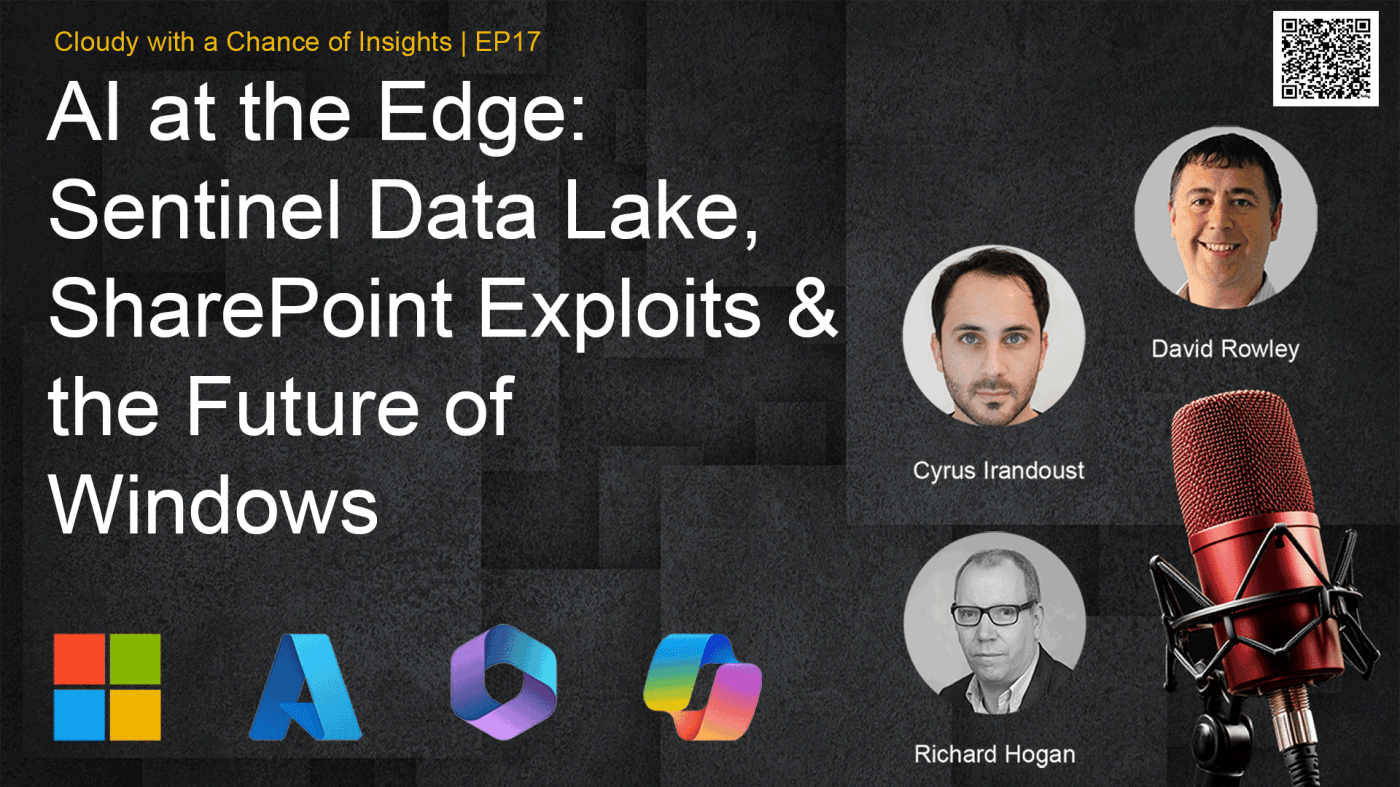
In this episode of Cloudy with a Chance of Insights, we dove into some of the most pressing and exciting developments across the Microsoft Cloud landscape. From the evolution of AI interfaces to the latest security innovations, the conversation was rich with insights and practical takeaways. Whether you’re a cloud architect, developer, or security professional, there’s something here for you.
AI Interactions: Understanding the Human-Tech Dynamic
David kicked things off with a look at Microsoft Research’s new framework for classifying human-AI interactions. This isn’t just about prompt engineering—it’s about understanding how users engage, correct, and disengage with AI systems across different contexts. As AI becomes more embedded in our workflows, this kind of telemetry will be essential for improving user experience and application design.
It’s a fascinating direction, especially as we move toward Microsoft’s 2030 vision for AI interfaces—where systems proactively assist users, adapt UI based on context, and even present a more human-like presence. The idea of giving Copilot a face might sound whimsical, but it’s part of a broader trend toward more intuitive, ambient computing.
Windows Backup: A New Layer of Resilience
We also explored the public preview of Windows Backup for Organizations. This isn’t just about file recovery—it’s about preserving user profiles, settings, and preferences in a cloud-backed, identity-tied way. For enterprise environments, this marks a significant step forward in user-centric design and operational resilience.
It’s especially relevant for organizations managing hybrid or remote workforces, where device continuity and user experience are paramount.
Sentinel Data Lake: Security at Scale
My segment focused on the newly announced Sentinel Data Lake, which is now in public preview. This is a major leap forward in security analytics. It aggregates data from across your environment—not just Sentinel logs, but XDR, Entra, and even app logs—into a unified, queryable lake.
With the addition of the Sentinel Graph, we’re now looking at a platform that can support AI-driven security analytics across diverse data sources. The tiered storage model helps manage costs, and support for KQL and Jupyter notebooks makes it accessible to a wide range of users.
This is about more than just threat detection—it’s about building a holistic, scalable security posture.
SharePoint Exploits: A Cautionary Tale
Cyrus brought us a sobering story from the Pwn2Own contest in Berlin, where a SharePoint exploit led to real-world breaches—including some highly sensitive organizations. The vulnerability chain (ToolShell) exploited on-prem SharePoint versions and highlighted the risks of internet-facing servers.
His takeaway? Zero trust isn’t optional. Pre-authentication, WAFs, segmentation, and Sentinel-based hunting are essential. And if you’re still running SharePoint on-prem, it might be time to consider SharePoint Online or Microsoft 365 Local.
This wasn’t just a bug—it was a trust failure. And it’s a reminder that security architecture must evolve alongside threat vectors.
AI Development Tools: Empowering the Non-Developer
David wrapped things up with a great example of using Claude Sonnet 4 in Visual Studio Code to automate integration analysis. Over seven days, he built a full reporting suite—without being a developer. It’s a testament to how AI tools are democratizing development and enabling architects to build solutions that are both reusable and impactful.
We all agreed: this is the future. Not replacing developers, but augmenting human intelligence with AI to accelerate outcomes.
Conclusion
This episode was a reminder of how fast things are moving—and how important it is to stay curious, critical, and collaborative. Whether it’s AI interfaces, cloud resilience, or cybersecurity, the Microsoft Cloud continues to push boundaries. And we’ll be here to unpack it all, one episode at a time.
Find this and more episodes like it at
YouTube: https://www.youtube.com/@CloudyWithaChanceofInsights
Spotify: https://spoti.fi/3D5jBLs
Apple Podcasts: https://apple.co/49kBxxL
 The Microsoft Cloud Blog
Leave a comment